Charting Player Migration Routes Triggered by Regional Policy Shifts in Licensed Digital Gaming Markets
Written by Taylor Hayes · Jul 31, 2026
Charting Player Migration Routes Triggered by Regional Policy Shifts in Licensed Digital Gaming Markets
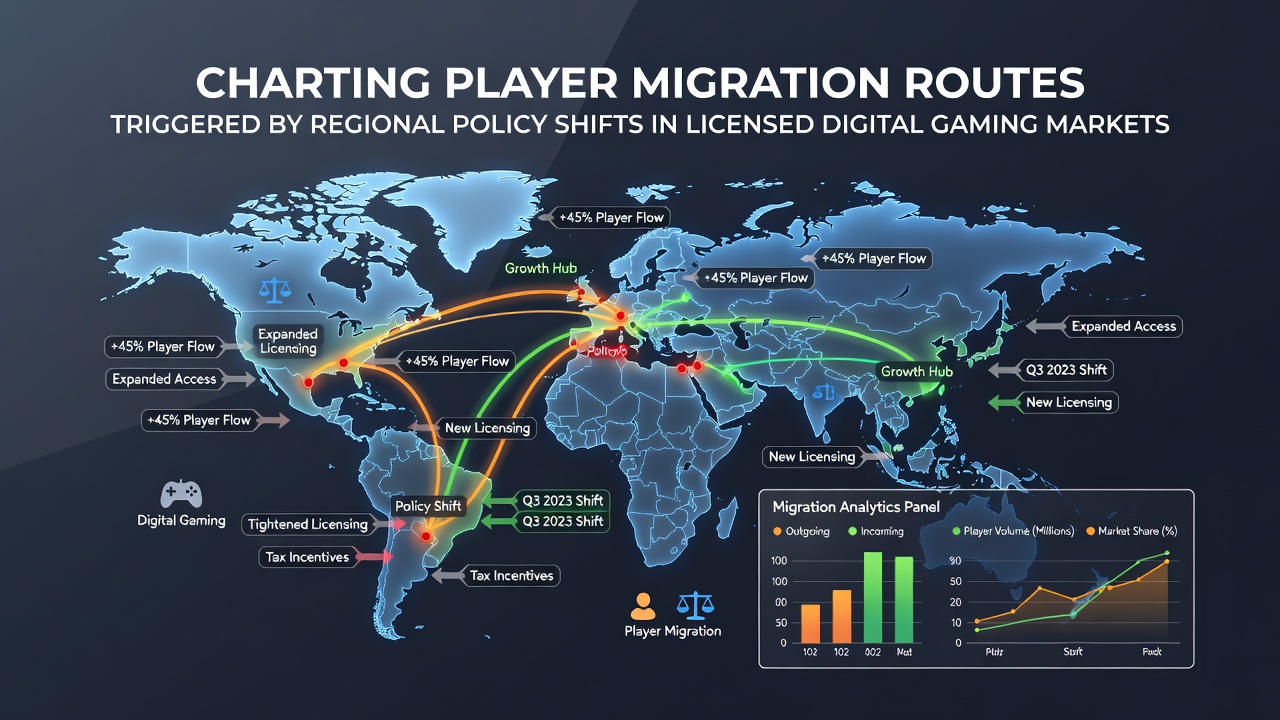
Regional policy shifts in licensed digital gaming markets have prompted measurable changes in player movement patterns throughout 2025 and into July 2026, with data tracking users relocating between jurisdictions as regulations evolve. Observers note that operators and analysts monitor these flows through transaction records, account registrations, and compliance reports rather than relying on anecdotal accounts. Policy adjustments such as tax rate modifications, licensing expansions, and cross-border restrictions create new pathways while closing others, and researchers compile these trends from government databases and industry submissions.
Key Policy Changes Driving Shifts
States and provinces across North America introduced or revised frameworks in late 2025, including adjustments to revenue sharing models and player verification standards that redirected activity toward markets with streamlined processes. In parallel, European jurisdictions updated consumer protection rules and licensing fees, prompting operators to reroute marketing and player acquisition efforts accordingly. Those who have studied these transitions point to specific examples where a single regulatory announcement correlated with spikes in account activity in neighboring or alternative licensed regions within weeks. Data from regulatory filings shows that such announcements often precede measurable upticks in cross-jurisdictional logins and deposit patterns, particularly when new rules affect deposit limits or game availability.
One documented case involved a mid-Atlantic U.S. state tightening advertising guidelines in early 2026, after which analysts recorded increased traffic toward platforms licensed in states with more permissive promotional rules. Similar patterns emerged in parts of Canada following updates to provincial online frameworks, where users migrated toward operators maintaining multi-jurisdiction licenses. These movements appear in aggregated statistics released by oversight bodies rather than individual player disclosures.
Observed Migration Patterns and Data Sources
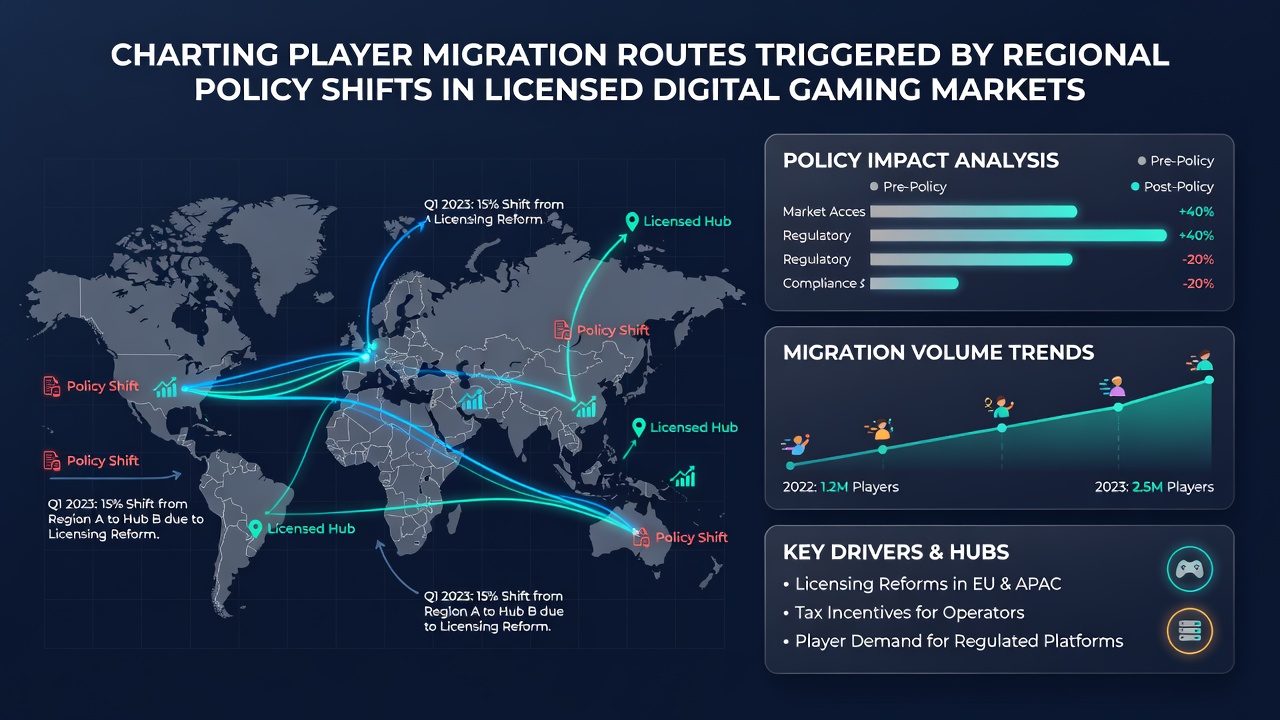
Analysts map migration routes by combining licensing records with payment processor trends and geolocation signals, revealing corridors that connect markets with differing tax structures or access rules. Figures released by the New Jersey Division of Gaming Enforcement indicate steady interstate player activity within the Multi-State Internet Gaming Agreement framework, while reports from Australian regulators track shifts between state-based and national licensing options. Researchers at academic institutions have begun correlating these datasets with policy timelines, identifying clusters where simultaneous changes in two regions accelerate movement along established digital corridors.
July 2026 saw additional updates in two western U.S. states that altered player fund segregation requirements, and preliminary transaction data suggests immediate but contained redirection toward established markets with unchanged protocols. Industry reports compiled by trade associations document that these shifts concentrate among higher-volume users who maintain accounts across multiple licensed environments, whereas casual participants show lower mobility rates. The patterns differ from earlier years because operators now deploy unified wallets and single sign-on systems that simplify transitions while remaining compliant with each jurisdiction's rules.
Impact on Licensed Operators and Compliance
Licensed operators respond to these flows by adjusting server allocations, customer support staffing, and localized game libraries to retain relocated users. Compliance teams track the same signals regulators use, cross-referencing IP changes with KYC updates to maintain audit trails. Evidence from quarterly filings demonstrates that markets experiencing net inflows often report corresponding rises in taxable handle, while outflow markets see temporary dips followed by stabilization once new equilibrium points emerge. Academic studies examining these dynamics emphasize the role of license portability clauses, which allow certain operators to serve users across borders without requiring separate onboarding for each jurisdiction.
Those monitoring the sector note that policy shifts in one region rarely produce uniform outcomes elsewhere, because local tax rates, payment gateway availability, and language support continue to influence final destination choices. Trade group summaries from 2026 highlight how operators with diversified license portfolios absorb migration volumes more efficiently than single-market entities. The resulting data sets now feed into predictive models used by both regulators and companies to anticipate future corridor pressures before new rules take effect.
Conclusion
Player migration routes in licensed digital gaming markets continue to evolve alongside policy adjustments, with July 2026 marking another cycle of regulatory recalibrations that analysts will track through established data channels. Comprehensive mapping relies on transparent reporting from bodies such as the New Jersey Division of Gaming Enforcement and complementary sources in other regions, creating a clearer picture of how users navigate changing landscapes. These documented flows underscore the interconnected nature of licensed markets and the ongoing need for coordinated compliance approaches across jurisdictions.